
Shutter Service & Maintenance
Alpine-Tech 360 provides professional inspection, servicing and maintenance of building shutter systems to help ensure reliable operation, extend service life, and reduce the risk of costly repairs.
Our technicians carry out routine maintenance on a wide range of manual and motorised shutter systems installed on commercial, industrial and residential buildings. Through regular servicing, we identify wear, damage and operational issues before they develop into major failures.
What a shutter service includes
- Comprehensive visual inspection of the shutter and its housing
- Lubrication of moving components and mechanisms
- Cleaning of tracks and guide rails
- Inspection of motors, controls and safety devices
- Adjustment of operational components where required
- Identification of wear, corrosion or damage
- Preventative maintenance recommendations
- Detailed service reporting
Why regular servicing matters
Regular lubrication and maintenance reduce friction, improve operating performance, minimise component wear and increase the overall lifespan of your shutter system. Most shutter failures begin as small, easily corrected problems - a dry track, a worn guide, a control that has drifted out of adjustment. Servicing catches those while they are still inexpensive to fix.
Shutters at height, without scaffolding
As a guide, shutter systems should be inspected once a year, and again after every building wash — washing strips lubrication out of the tracks and bearings, so they need re-lubricating once the building has been cleaned.
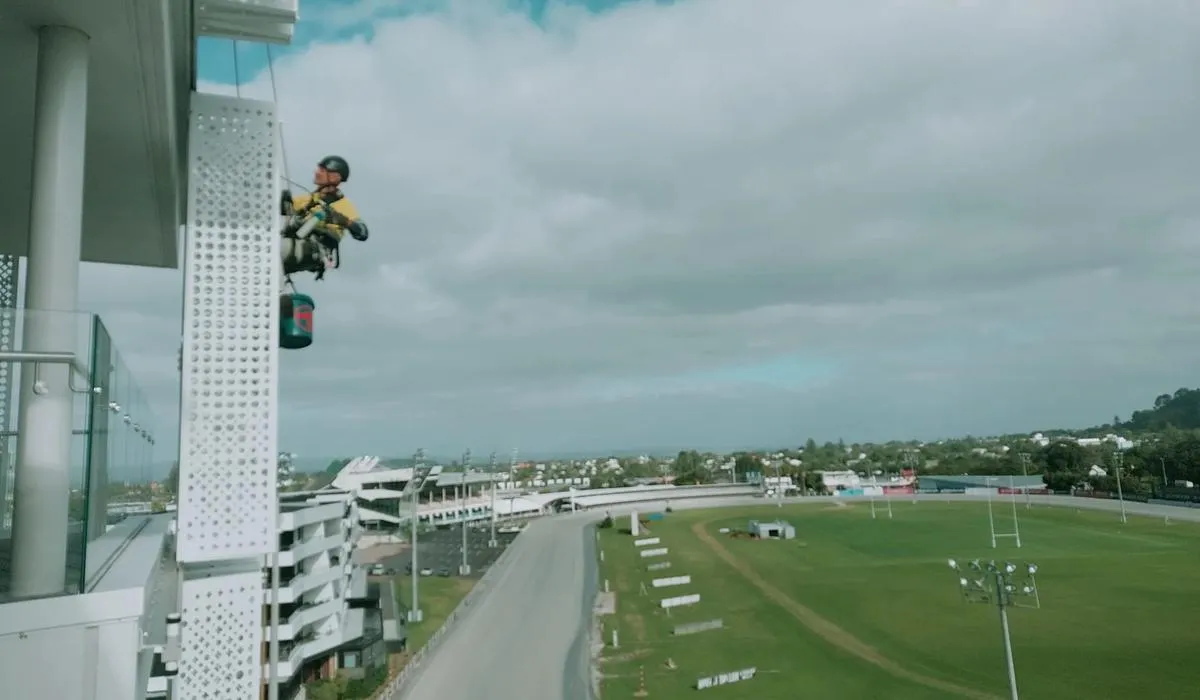
Where access is difficult, our IRATA-certified rope access technicians safely reach elevated shutter systems without the need for extensive scaffolding or access equipment. That keeps the work efficient and cost-effective, and it keeps disruption to the building and its occupants to a minimum.
We service shutter systems across Auckland and Hamilton. Get in touch to discuss a maintenance schedule for your building.
Useful information
- Systems serviced
- Manual and motorised shutter systems
- Building types
- Commercial, industrial and residential
- Typical scope
- Inspection, lubrication, track cleaning, adjustment
- Components checked
- Motors, controls and safety devices
- Access method
- IRATA-certified rope access where required
- Service areas
- Auckland and Hamilton
- Reporting
- Detailed service report after every visit
- Service interval
- Once a year, or after every building wash
FAQs
How often should shutter systems be serviced?
Once a year as a minimum, and again after every building wash. Washing strips lubrication from the tracks and bearings, so re-lubricating them afterwards keeps the shutter running smoothly and prevents avoidable wear.
What does a shutter service include?
A full visual inspection, lubrication of moving components, cleaning of tracks and guide rails, inspection of motors, controls and safety devices, adjustment where required, and a detailed service report noting any wear, corrosion or damage found.
Do you service both manual and motorised shutters?
Yes. We service manual and motorised shutter systems on commercial, industrial and residential buildings, including the motors, controls and safety devices on powered units.
Can you service shutters that are difficult to reach?
Yes. Our IRATA-certified rope access technicians reach elevated shutter systems directly on rope, so there is no need for scaffolding or elevated work platforms. That reduces both the cost and the disruption of servicing shutters at height.
Why does shutter lubrication matter?
Lubrication reduces friction between moving parts, which improves how smoothly the shutter operates and slows the rate at which components wear. Dry tracks and mechanisms are one of the most common causes of shutter failure, and they are also one of the easiest to prevent.
Why choose us
- Complete vertical solutions
From façade maintenance to structural reinforcement, we handle it all - without the need for costly scaffolding.
- IRATA-certified technicians
Our rope access teams are trained to the highest industry standards.
- Safety above all
Fully insured. Compliant with industry regulations.
- Minimal disruption
Fast setup. Less noise. No scaffolding footprint.
Talk to us about this job
Tell us what needs doing and where, and we'll come back to you with a quote.